
siem reap – cambodia
Pea Reang Bird Sanctuary
& Tonle Sap Birds
Great Lake Ecology & Waterbird Sanctuary
Guided by Christophe Guénolé, Environmental Naturalist Researcher
A fascinating immersion into the heart of Southeast Asia’s most vital waterbird sanctuaries
Embark with Christophe Guénolé, environmental naturalist researcher, to explore the Pea Reang Bird Sanctuary, located at the gates of the iconic Tonle Sap Lake. Navigating through flooded forests and open waters, discover the unique ecological mechanics of this giant pulsating ecosystem and observe spectacular colonies of rare and threatened waterbirds.
Experience Overview
Choice of:
Morning Option:
Early departure at dawn (around 5:30 AM – 6:00 AM) to witness the awakening of the lake and the departure of bird colonies.
Mid-Afternoon Option:
Departure around 2:30 PM – 3:00 PM to observe birds gathering at roosting sites and enjoy the sunset over Tonle Sap Lake.
Combined excursion (transfer followed by a private traditional boat ride through flooded forests)
Small group (up to 5 people maximumto ensure the quiet atmosphere required for birdwatching)
Ornithology, wetland ecology, Tonle Sap’s pulsating hydrological dynamics & aquatic wildlife conservation
Scientific guiding by Christophe Guénolé, transfer, private boat trip, observation equipment (spotting scope / field binoculars), fresh water.
The Tonle Sap:
A World-Unique Ecosystem
Tonle Sap is no ordinary lake: it is the hydrological heart of Cambodia and one of the most productive wetland ecosystems on the planet.
- The Unique Reverse-Flow Phenomenon: During the monsoon season, the Mekong River swells to such an extent that it reverses the flow of the Tonle Sap River, pushing water back into the lake. The lake’s surface area expands up to four times its dry-season size, submerging the surrounding forests.
- The Flooded Forest: This submerged plant habitat serves as a giant nursery for fish species and an essential feeding refuge for hundreds of thousands of waterbirds.
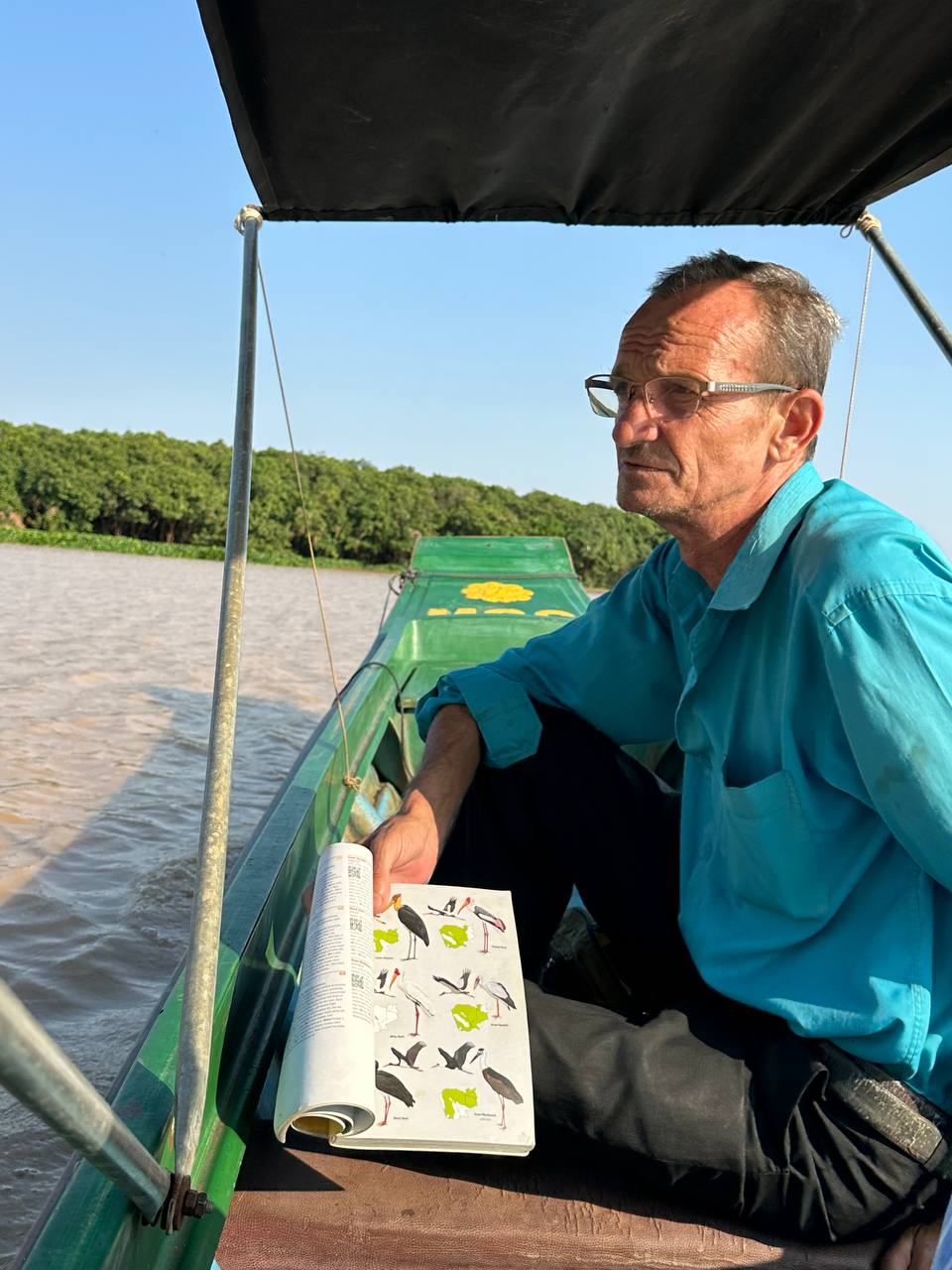
Stars of the Sanctuary: Avian Highlights
Thanks to community-based protection efforts at Pea Reang, the sanctuary harbors an impressive density of waterbird species, including several globally threatened birds:
Large Waders & Pelicans:
-
- Spot-billed Pelican (Pelecanus philippensis) — Spectacular breeding colonies
- Lesser Adjutant (Leptoptilos javanicus) & Greater Adjutant (Leptoptilos dubius)
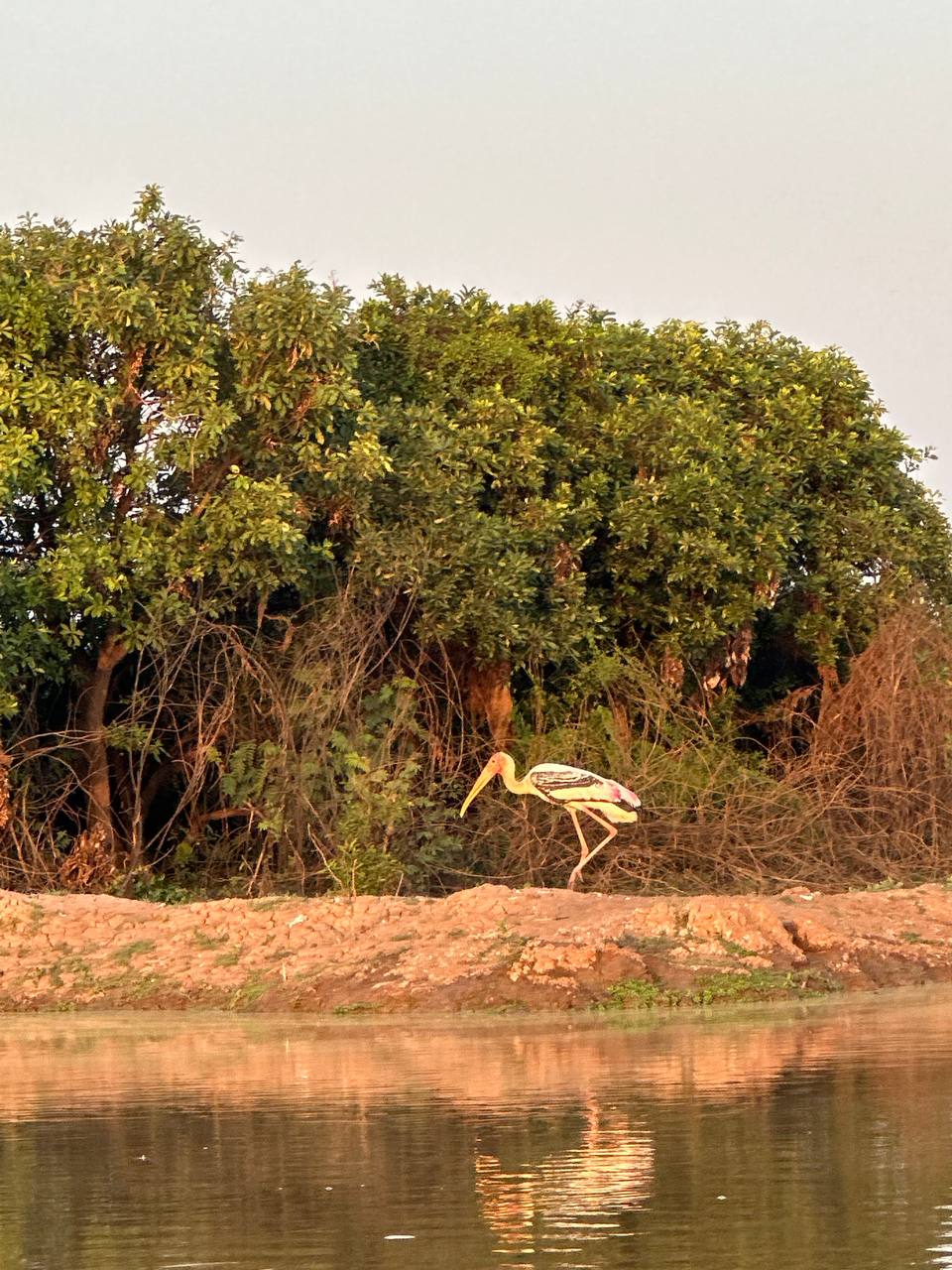
- Painted Stork (Mycteria leucocephala)
- Asian Openbill (Anastomus oscitans)
Cormorants, Darters & Herons:
-
- Oriental Darter / Snakebird (Anhinga melanogaster)
- Great Cormorant & Little Cormorant
- Purple Heron, Great Egret & Bitterns
Raptors & Waterfowl:
-
- Grey-headed Fish Eagle (Icthyophaga ichthyaetus)
- Pheasant-tailed Jacana, Moorhens & Rails
Itinerary
1. Transfer & Lake Approach
Crossing countryside landscapes and stilt villages along the lake’s edge.
2. Boat Navigation in the Flooded Forest
Gliding quietly among submerged trees and waterways within the Pea Reang Sanctuary.
3 – Birdwatching Session
- Morning: Watching thousands of waders take flight as they leave their roosts for feeding grounds.
- Afternoon: Late-day boat ride at sunset, watching birds return to their nests amidst the golden light over the lake.
4. Ecological Insights by Christophe Guénolé
Decoding food webs, the role of artisanal fishing, and conservation challenges within this UNESCO Biosphere Reserve.
Practical Information
Recommended Gear:
Binoculars, camera with telephoto lens, hat, sunglasses, light clothing,
and insect repellent (especially for the sunset option).